Russell Station Update January, 2015
It occurred to me, although its probably too late,
http://www.rge.com/Russell/default.html
that Russell could still be converted to Gas and put back on line.
Cable trays could be run from under each 480 room, overhead to each motor, which would not be all that expensive.
(Probably far less then the demolition will cost, and properly disposing of all the hazardous materials)

As you know I tried to get the PSC to do something about Russell Station.
Anne Dalton from the PSC told me:
"Mr. Kaspersin You are wasting your time. Russell Station is a done deal".
Later in our conversation she said
"You are beating a dead horse".
So I just sent this to her:

Anne,

I wanted to be sure all of you at the PSC didn't miss this.
Texas Heat Wave: Meeting Energy Demands: Record-high temperatures compel
companies to reopen old power plants. Guess some utilities
(at least the ones who care about their customers)
can breathe new life into a dead horse.

Record-high temperatures compel
companies to reopen old power plants.

Regards,

David R. Kaspersin
President
Dynamic Recording Studio / Dynamic Web Pages
2844-46 Dewey Ave.
Rochester N. Y. 14616 -4630 USA
http://www.dynrec.com
drk@dynrec.com
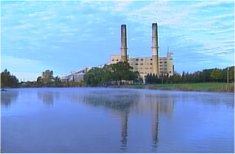
White elephant on the lake: RG&E no longer has any use for the Russell Station power plant near the Lake Ontario shoreline in Greece.
Steve Orr D and C
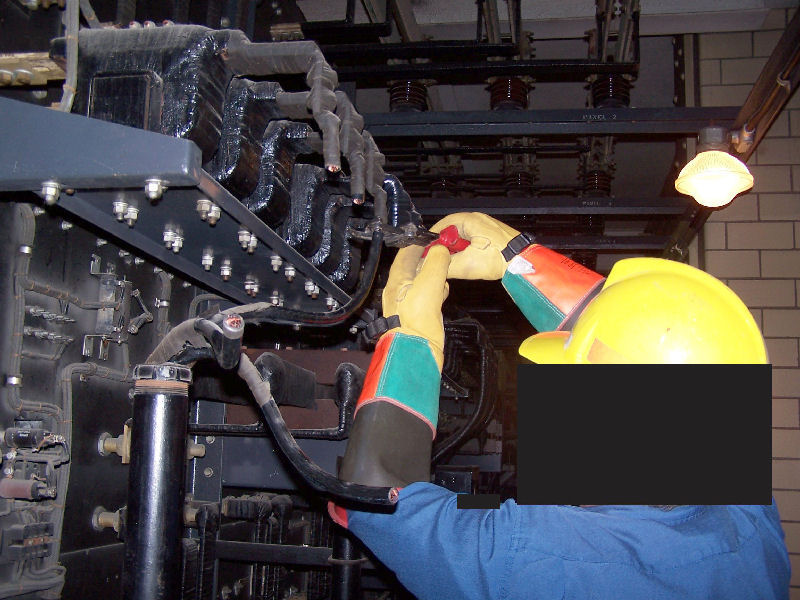
The truth is the RG&E disabled the plant because
they did not want anyone buying it as that would be
competition. Therefore the RG&E ordered all cables
to all equipment in Russell Station to be severed
at the floor to prevent splicing. Not only did this
cost the rate payers a lot of money, but it means if
the grid were to fail, Rochester would have no power
until the grid could be restored.
Kodak Park has two generators that are the same make
and vintage as the ones at Russell.
Kodak converted to gas and they are still producing power.
What the RG&E did to Russell Station is a crime,
and the PSC knew they were doing it.

David R. Kaspersin
Rate Payer and former RG&E employee.
Greece, NY
More ABC US news | ABC Health News
Russell Station Update January, 2011
PETITION TO TERMINATE AUCTION PROCESS
Dated: December 29,2010
Which basically says, We can't auction off properties
that we have rendered useless.
Russell Station Update October, 2010
I meet with a GREAT group of RG&E retirees
first Tuesday of every month for lunch.
One of our group said
"Hey Dave you haven't updated your RG&E page in a while.
So here it is:

After Russll Station was shut down someone ordered
all of the cables to all of the equipment be severed
to prevent the Station from ever generating power again.

WHY ?
In case of a Grid failure Russell would sure come in handy.

Energy East / RG&E / Iberdrola
has shut down all RG&E Hydro Plants except two.

WHY ?
(Can you say FREE POWER is good to have)
During the black out Station 5,
under the Driving Park Bridge, was the sole reason
Rochester was able to get back on line so quickly.
The water penstocks are not useable, and the roof has collapsed
on the turbines. This station generated FREE POWER for over one
hundred years. (THREE 15 Mega Watt turbines)

RG&E / Iberdrola laid off 140 employees on Jan 29, 2010.
And 110 lost their jobs when Russell closed.
Remember Monopolies do not need to lay off or cut back.
Wish everyone in Monroe County HAD to record in my Studio ONLY - - -
September, 2010
I sent my concerns about the cables being severed to RG&E, Energy East and Iberdrola
and of cource was ignored.
So I filled a complaint with the PSC and after a lot of calls to the RG&E
and to the PSC received this from the RG&E.
To whom it may concern,
Red high lights are very questionable answers from the RG&E.
1. Many plants are much older then Russell and still operating.
2. Cables are grounded for safety, not cut.
3. A witness to the damage,
reaffirmed that all cables to all equipment were severed at the floor to prevent
splicing. This person stated "It would cost Millions to allow Russell Station
to generate electricity again."
4. If this is true, and I doubt it is, I would rather see
this money used constructively, not in a destructive way
that I also feel is criminal.
Should the Grid fail, weather from being overloaded
or from a terrorist attack, as an RG&E business customer
I would rather the RG&E have the option of placing Russell, Station 3,
and the three hydro generators at Station 5 on line.
Also removing these eight generators from service has
created problems with the electric system in Monroe County.
Var problems, system stability problems and low Voltage
in many areas.
September 24, 2010
Mr. David Kaspersin
Dynamic Recording Studio
2844 Dewey Avenue
Rochester, NY 14616
RE: PSC Case # 030518
Dear Mr. Kaspersin:
Thank you for your inquiry regarding Russell Station.
~ As a former electrical maintenance employee at Russell Station, you are aware of the plant's age
and its outdated emissions control technology. Therefore, you are likely also aware that after 60-
plus years of continuous service, the plant and its existing equipment could no longer comply with
federal Clean Air Act standards. Further,
(1) it would have been uneconomical to retrofit the plant in
its existing configuration to meet those standards.
As a result, RG&E developed and built the Rochester Transmission Project (RTP), which upon its
completion provided the means to replace the energy provided by Russell Station and allowed for
the shutdown of all four generating units. The last Russell generating unit ceased operation on
April 23, 2008, and RG&E then carried out the final plant closure activities.
At that time, it was clear that preserving unneeded and non-operating plant and substation
equipment for an indefinite period of time -or for the improbable return to service -would be
impractical, uneconomical and not in the best interest of RG&E and its customers.
(2)Therefore, to
ensure safety and to allow for the removal of abandoned substation equipment, the generator
interconnect cables were isolated at the substation and at the plant. Although it is extremely
unlikely, if it is necessary at some point in the future and if the condition is acceptable for
returning the plant to service,
3.the existing generator-transformer cables can be spliced to
interconnect equipment.
(4)The plant closure work was recovered from customers through the non-bypassable wires charge,
consistent with the Public Service Commission authorized rate plan in place for RG&E. As
provided for in the rate plan, customers also stopped paying for fixed and variable
from the non-bypassable wires charge. : " .~
I hope this information is helpful. If you have further concerns, I can be reached Monday through
Friday between the hours of 8:00 a.m. and 4:30 p.m. at 1.800.743.1150.
i:J~ ~
Nancy Elwood
Appeals Department
RG&E Executive Office
CC: James Lahtinen, Vice President, RG&E
Edward Schrom, NYS Public Service Commission
An equal opportunity employer
89 East Avenue I Rochester, NY 14649-0001
www.rge.com E:::
An Energy East Company
Next I contacted the PSC again as the RG&E had not answered my questions.
and received this:
To: Dave Kaspersin
Subject: Re: In Regards to PSC Case #030518 Item 2 of 5
Sensitivity:
X-Mailer: Lotus Notes Release 6.5.3 September 14, 2004
From: anne_dalton@dps.state.ny.us
Date: Mon, 4 Oct 2010 16:52:05 -0400
X-MIMETrack: Serialize by Router on ALBMail/S/NYSDPS(Release 6.5.6FP3|March 27, 2008) at
10/04/2010 16:52:16,
Serialize complete at 10/04/2010 16:52:16
Mr. Kspersin:
As per several emails you have sent me please be advised of the following:
The Commission's December 16, 2004 Order indicates that "studies provided
by RGE indicate that projected load growth in this area [Rochester] would require major upgrades to the transmission system
whether or not there were any changes to the operation of Russell Station."
As further noted in the Dec 2004 Order..." The units that comprise
Russell Station went into operation between 1948 and 1957, and they cannot continue to operate at their current capacity
for the necessary hours of operation without substantial investment in plant modifications to meet changing environmental regulations.
Regulations under NYS's Acid Deposition Reuction Progrgam will become effective during the next few years.
A federal court order requires the Environmental Protection Agency (EPA) to put new Federal mercury emission regulations
requiring pollution control equipment into effect by 2008. Russell Station is also the subject of a May 25,2000
Notice of Violation from the NYS Deparment of Environmental Conservation (DEC) for allegedly not obtaining Prevention of
Significant Deterioation (PSD) permits are required by the Federal Clean Air Act and the NYS Environmental Conservation Law.
All of these circumstance place in serious jeopardy the ability of Russell Station's owners to achieve the plant performance
need to economically or physically serve the load pocket. Even if Russell Station were to be repowered in order
to meet increased environmental standards, it would not be possible to take Russell Station out of service to ecnomically
implement major modifications until the load pocket is relieved by the construction Rochester Transmission Project
(RTP). Accordingly, the RTP represents the best option for RGE to meet its customers' needs now and in the furture, regadless
of final disposition of Russell Station."
Later in the same Dec 2004 Order, the Commission also states...."
RGE's investment in Russell Station is largely depreciated, and Russell Station is the last large generating station
in New York operated by an investor-owned transmission and distribution utility. Given New York State's preference for having
utilities divest their generation, it would be inadvisable for RGE to attempt to rebuild Russell Station. Independent
power produce rebuilding as a substitute for the RTP is not feasible because because such a rebuilding could also not be done
economically or perhaps even physically without first putting in the RTP into service. Moreover, it would not be wise
for RGE to rely solely on an indipendent power producer ro satisfy the load pocket since it would have no obligation
to provide reliable service to RGE's customers in the Rochest load pocket. That reliable service is properly and economically
provided, over the long-term, through elimination of the load pocket by RGE's construction of a transmission facility--
the RTP. The RTP will not only resolve the Rochester load pocket, but will give the Rochester area access to new sources of
power from energy market participants."
Lastly, the Dec 2004 Order indicates...."The RTP would also be in the
public interest because it would all RGE to fulfill its commitment (made on the record in RTP-0051) to follow an appropriate
competitive auction process with a goal of the sale of the Russell Station site to a non-affiliated entity." The Sept. 2004
order is accompanied by a Joint Proposal to resolve matters related to RTP's proposal which was signed by Staffs of the
Department of Public Service, DEC and Ag & Markets.
As part of the September 2008 Iberdrola Merger Order, the Commission required RGE
to file a divestiture plan for its fossil generation assets (including Russel Station). In May 2010 bids for RGE's
possible genreation were received and are under review.
Please call me if you have any further questions. Attached is the link for the Dec. 2004 Order:
http://documents.dps.state.ny.us/public/Common/ViewDoc.aspx?DocRefId={41B13530-6043-4188-923A-42B4F9A68F0B}
Now although the above is a very nice responce
once again the PSC chose to ignore my questions.
So I tried again:
Re: In Regards to PSC Case #030518 Russell Station Rochester NY
Dear Anne Dalton and The Members of The PSC,
Thank you for your quick reply.
However, your email does not address all of my concerns.
I had lunch tuesday (10/05/2010) with twenty RG&E retirees from my former department,
Electric Substations. The people in this group include Superintendents,
Mechanical and Electrical Engineers, Managers, Generation Electricians, Substation Electricians,
High Voltage testers, Foremen, General Foremen, Relay personnel, even one former VP.
This is a very elite and intelligent group of former
RG&E employees. ( Some are very recent retirees)
Everyone present agreed the RG&E did not address my concerns,
and misrepresented the truth.
And all agreed the PSC did not address my concerns.
Therefore I am trying again to get the answers to my questions and concerns.
Please have someone from the PSC and / or the RG&E, and / or Energy East and / or Iberdrola answer the following
five questions and please place each answer under each question below.
1. The names of the person or persons who ordered the cables severed
and which of these companies they were working for at the time.
2. The date disabling the equipment and cables at Russell Station was started -
the date it was completed -
total hours to complete -
Total cost -
3. RG&E stated the cables could be spliced.
One of our luncheon group, who was a witness to the damage,
reaffirmed all cables to all equipment were severed at the floor to prevent
splicing. This person stated "It would cost Millions to allow Russell Station
to generate electricity again." Is this what really took place ?
4. Estimate of how many millions of dollars it would cost to repair
these damages if a company wanted to purchase Russell and convert it to Gas ?
5. Please have someone go to Russell Station and verify what has been done and take pictures.
(I would be happy to assist.)
As I have said previously, I believe this was a criminal act.
And should the Grid fail, due to being overloaded
or from a terrorist attack, as an RG&E business customer,
I would rather they (RG&E) have the option of placing the four
generators at Russell Station and the three generators at Station 5 on line ASAP.
The group I meet with all knew the RTP would not be sufficient,
(Some of them were involved in the planing of the RTP)
and that low voltage problems would arise.
This has been confirmed to me by many present RG&E employees.
Sincerely,
David R. Kaspersin
President
Dynamic Recording Studio
2844-46 Dewey Ave.
Rochester N. Y. 14616 -4630 USA
http://www.dynrec.com
drk@dynrec.com
585-621-6270
My last communacation with the PSC was by phone.
The person I spoke with said
"Mr. Kaspersin You are wasting your time.
Russell Station is a done deal".
Later in our conversation this person said
"You are beating a dead horse".
My last communacation with the RG&E:
November 9, 2010
Mr. David Kaspersin
Dynamic Recording Studio
2844 Dewey Avenue
Rochester, NY 14616
RE: PSC Case # 030518
The Company has received a Notice from the New York Public Service Commission
Office of Consumer Services indicating that you were asking for more information after
receiving our prior response to your inquiry regarding Russell Station. Specifically, the
Notice indicates that you are seeking answers to five questions. This letter is being sent
to you in response to your most recent contact with the Office of Consumer Services.
As you know, RG&E was ordered by the PSC to divest its ownership in the Russell
Station site, and we are currently involved in that process. As part of the divestiture
process we have and will be providing information regarding the Russell Station site to
qualified participants. Other than possibly through the ordered divestiture process, we
will not be sharing detailed information regarding the Russell Station site such as you
have requested. Of course, to the extent any informatlon regarding the Russell Station
site becomes publicly available through the divestiture process, you, similar to any other
member of the public, would have access to the information.
I can be reached Monday through Friday between the hours of 8:00 a.m. and 4:30 p.m.
at 1.800.743.1150.
Sincerely,
-~-~-
Nancy Elwood
Appeals Department
RG&E Executive Office
..~C: NYS Public Service Commission
So I would say the PSC and the RG$E are telling me,
a rate payer and a customer, to mind my own business !
However it is my business that I am worried about - - -
Isn't it he duty of the PSC to protect we the rate payers
from PUBLIC MONOPO-LIES ?
This from the PSC Web Site:
Russell Station
The PSC staff contends Russell Station could be converted to gas fire quickly and add strength in a competitive market.
Iberdrola contends that if they are not committed to repower Russell Station with natural gas that
the PSC staff will oppose the acquisition. Iberdrola has liability concerns with Russell Station
and argues that the Rochester Transmission Project should have alleviated much of the pressure
to rehabilitate Russell Station which is scheduled to close next year. Iberdrola wants to go
through the licensing process and SEQRA to look at alternatives for Russell Station. Iberdrola
maintains that they do not know what the ramifications are in relation to Russell Station and
would like to do their due diligence before making a recommendation.
PSC staff maintains that Iberdrola should open up an action for competitive bid to other
companies for the sale of Russell Station. PSC staff maintains that while there may be liability
issues the Rochester Transmission Project was funded by rate payers and designed to provide
time to rehabilitate Russell Station. The PSC staff contends Russell Station could be converted to
gas fire quickly and add strength in a competitive market. The PSC staff argues that the future of
Russell Station needs to be addressed as part of these negotiations to the benefit of consumers.
MI contend that Energy East is on record as making a commitment to sell Russell Station to a
non affiliated competitor at auction and expect Iberdrola to honor that commitment.
http://docs.google.com/viewer?a=v&q=cache:ZYNo9WDt1SMJ:www.dps.state.ny.us/07M0906/07M0906_IBEW_testimony.pdf+IBERDROLA+Russell+Station&hl=en&gl=us&pid=bl&srcid=ADGEESgefCK08htFD7vWSGKoOzlnMobLm6EY56w3BXXOgPb3Op_ZQa1w8Auuyt-vuNkrSjD6EDGDL0_CGOLeyj2-PW2NuocsixqJRLF2xp4lgF7pme6v6K36rhs7ba5DfJ2Fq77VkEYx&sig=AHIEtbSdLciCT18V1HoOOrWDXpMaA1Q9uQ
System Council U-7, IBEW and Local 36, IBEW agree with the position of the PSC staff.
I wonder why the change of heart ?
And after reading all of this,
if you want a laugh, Click Here to listen to this actual
sound clip from an RG&E radio ad when Russell Station-7
was first being built over 75 years ago !
Seeking Alpha Utility Stocks
$500 million for the repowering the Russell Station power plant using clean coal technologies.
The company estimates that these efficiency investments could result in CO2
reductions of close to 1 million tons annually, the equivalent of taking
It was only $200,000 to $400,000 in October, 2003 ?
"RG&E reports that the plant (Russell Station) needs at least $200,000 of upgrades--
perhaps even as much as $400,000--to meet "clean air" standards."
============================================================
Serious concerns about the closing of Russell Station
As a Greece, NY, businessman, I am very concerned,
for all of the reasons listed below, about what will
happen to the power available to run my business
if Russell Station is closed.
As you are well aware, last summer (2003) New York State had a major blackout
and as a former employee of the Rochester Gas and Electric
I have been aware of grid deficencies for at least the last 20 years.
Here are two recent articles in the news about Russell Station:
Potential Area Energy Woes
Jane Flasch
WOKR-TV NewsSource 13
02/20/02
RG&E reports that the plant (Russell Station) needs at least $200,000 of upgrades--
perhaps even as much as $400,000--to meet "clean air" standards.
RG&E plans $75M upgrade
By Todd Grady
Staff Writer
(October 1, 2003) — Rochester Gas and Electric Corp. on Tuesday
asked the state Public Service Commission to approve a $75 million project
to improve and expand its electricity delivery system.
The project, which would mostly upgrade substations and power lines,
is needed to deal with the power void when RG&E in 2007 closes its
55-year-old coal-fired Russell Station plant on the Lake Ontario shore in Greece.
Only 400,000 to keep Russell Station going,
yet $75 MILLION to upgrade because of its loss ?
The Grid is in trouble and closing Russell would mean 270 less megawatts
being generated, as well as over 100 jobs lost -
not to mention what will happen to the tax base in Greece
with this major tax payer gone.
The Ginna Nuclear Power Plant is old by nuclear standards
and could go down for good. Another 500 megawatts lost.
When RG&E closed BeeBee Station in Rochester another 100 mw was lost,
and RG&E has shut down many of their hyrdro stations as well.
There is probably more and these equations just don't add up.
RG&E will say Russell is too old, which is not accurate -
everything in Russell station can be repaired or replaced
and most of the plant has been kept up to date.
Closing Russell Station will have a major detrimental impact on the greater
Rochester area and it's economy.
Dave Kaspersin
BTY: RG$E will say Russell is too old.
Not true. Everything in Russell can be repaired or replaced.
And as "Half Lives" go Ginna is older :)
And this is the Corporate Crap answer I
received from the RG$E.
(Which probably came from Enron East)
May 20, 2004
Mr. Dave Kaspersin
President
Dynamic Recording Studio
2844-46 Dewey Avenue
Rochester NY 14616-4630
Dear Mr. Kaspersin:
Thank you for your email dated April 18, 2004 sharing comments and
concerns relative to RG&E's Rochester Transmission Project ("RTP")
and the closing of Russell Station. This letter, prepared on behalf of
Jim Laurito - President of RG&E, is in response to that communication.
Since 2003, RG&E has been actively providing information on the RTP
and soliciting comments. In fact, RG&E representatives have made
numerous presentations on the RTP to local government officials, town
boards, community groups, and neighborhood associations in Monroe
and Wayne counties. We have also hosted public meetings for interested
citizens to ask questions. Those presentations and public meetings
were intended to bring forth the types of issues you expressed and to
provide a forum for their discussion. I hope to address below the concerns
expressed in your email and letter:
Concern about available power supply and grid deficiencies - Russell
Station must close, but the RTP will provide better access to other sources
of competitively priced energy.
While RG&E recognizes the significant impact of the August 2003 blackout,
it is improtant to note that the power delivery system (or "grid") operated
properly, continuing to transport energy throughout the event. Furthermore,
the diligent work of our Energy Control Center allowed for safe and effective
implementation of load shedding procedures as mandated by the New York
Independent System Operator, and RG&E was able to continue to supply
power to vital infrastructure and critical care facilities.
The RG&E transmission and distribution system is certainly inter-connected
with the grid, and Russell Station is one source that feeds into that system.
Even though Russell Station must close, the RTP will provide better access
to other sources of competitively priced energy.
RG&E prepared and submitted its application to the New York State Public
Service Commission (NYS PSC) as part of the Article VII process, a process
set forth in New York State Public Service Law. The application describes
the need and proposed methods for accomplishing RTP work. The NYS PSC
reviews the proposed project for public need and environmental compatibility.
Concurrently, the New York State Independent System Operator reviews the
project for electric need and grid compatibility.
Concern about cost effectiveness of RTP versus upgrading Russell Station -
RG&E concludes the $75 million RTP to be the more economic alternative.
Tougher New York State air regulations will make it uneconomic and pro-
hibitive for RG&E to continue to operate the plant after 2007. It is not
economically feasible to upgrade Russell Station so that it could meet
the new air regulations. While such modifications to Russell Station would
cost hundreds of millions of dollars, the RTP is estimated to cost approxi-
mately $75 million. The effective air emission standards can be viewed at
the following sites: http://www.dec.state.ny.us/website/regs/237.htm and
http://www.dec.state.ny.us/website/regs/238.htm.
Concern about impacts of Russell closure - RG&E will continue to provide
reliable, essential electric service to its customers.
With the closure of Russell Station, customers will not see any change in
their delivery service. In fact, the RTP will enhance access to competitive
sources of energy. RG&E will continue to provide reliable, essential
electric service to its customers.
As you probably know, RG&E is selling its Ginna Nuclear Station in accord-
ance with New York state public policy regarding utility restructuring, in
order to focus on providing safe and reliable energy delivery services.
Accordingly, the Ginna Nuclear Power Plant will be sole to Constellation
Energy. However, a long-term power purchase agreement between RG&E
and Constellation will ensure that RG&E's customers continue to benefit from
Ginna's competitive and dependable power.
For your information, enclosed you will find Key Facts and Frequently Asked
Questions related to the RTP. RG&E is working diligently to minimize
disruptions and inconveniences that might be caused by our activities. We
intend to work cooperatively with the PSC and other interested parties on
this important project to ensure reliable and essential service is maintained
in the Rochester area.
Please feel to call me at (585) 771-2145 or the RTP Project Manager, Kurt
Doern, at (585) 724-8672 with any other questions or concerns.
Sincerely,
B. Yvonne Selbig
Community Coordinator - Generation
Enclosures
xc: R. Bergin
K. Doern
J. Draghi, Esq. (LLGM)
Update 08/14/03
Just 9 Seconds
The man leading the investigation into the worst
blackout in history says, "we will not cover up anything."
Large parts of the U.S. and areas of Canada were plunged
into darkness in nine seconds, and some are still without power today.
Superpower With a Third World Grid
Amid the blame game, former Energy Secretary Bill Richardson
who described the United States as a "superpower with a
Third World electricity grid" argued the problem was due
to an antiquated infrastructure.
"We have a huge demand for electricity with computers, technology,
more people, but we have not fulfilled the infrastructure needed
to deal with that new demand,"
he told Good Morning America today.
"In other words, we don't build new transmission lines. The American
people in many regions don't want them in their backyard."
The problem, according to Richardson, was essentially because
almost the entire eastern seaboard was run by the Niagara-Mohawk grid,
which, "has been overloaded for years."
Power company officials and government regulators have tried to
find ways to beef up the Northeast power grid for some time.
Experts say the Northeast has been short of power supplies needed for hot days
and short of transmission lines to move that power where it's needed.
"The power outages that we're seeing would suggest that something
went wrong up in New York state somewhere from Syracuse north to
the Canadian border," energy writer Bill Paul told ABCNEWS.
"And what happened was a bunch of safety procedures went into
play and the lines, the power, started to be cut off what you
would call down stage. So you had an impact all the way down into Manhattan.
You had an impact all the way out west into Cleveland and Detroit."
Click For More on Voltage Problems.
Click For More on Demand Metering.
Who Killed Montana Power?
Feds Find Power Manipulation in Calif.
Enron East/RGS/RG$E Give Ginna Station Away !
Russell Station Pics by Don Baker taken from his private jet. 09/2011